GrainGage Chamber Size Options
The Low-Yield Insert Kit allows the GrainGage to measure test weight and moisture for low-volume plot samples that are not large enough to fill the test chamber (140 cubic in. or 2.3 L). The low-yield insert kit allows measurements on plot samples as small as 70 cubic in. (1.1 L).
The insert count is the number of inserts present in the chamber. It is used to select the default volume for the test chamber, which is important to both the accuracy and function of the system. Test weight calibration is required even if you do not plan to use the test weight data. Properly calibrating test weight will ensure the full test cup and full bucket weight are accurate. It can also ensure an accurate moisture measurment and the bucket does not overflow when harvsting strip tests.
The default volumes of the chamber are:
Zero Inserts = 142 cu/in (2327 cu/cm)
One Insert = 110 cu/in (1803 cu/cm)
Two Inserts = 81 cu/in (1327 cu/cm)
Note: We also recommend a 10–20% chamber headroom (10–20% more grain than what is required to fill the cup) to perform a test chamber measurement and/or trigger additional sub-cycles.
When using inserts, it is more difficult for grain to flow freely (especially with lighter test weight crops such as oats, barley, sunflower, etc.) causing bridging and/or inaccurate moisture and test weight readings. Take extra care to ensure the samples are clean and flowing freely. It is always better to keep the chamber size as large as possible to improve flow rate and consistency. As the chamber size is decreased, so too is the flow rate. The evacuation time should be checked to ensure the grain is evacuating completely between each plot. If not, you may get a retare error between plots.
There are three chamber size options. The weight recommendations vary depending on the grain type and test weight, but a general guideline is shown in the table below.
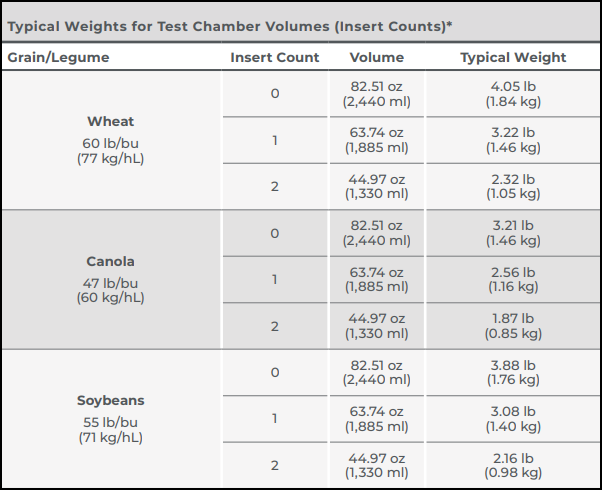
*These measurements are based on the United States (Winchester) bushel.
If you are only using one insert, install the insert on the opposite side of the top and bottom gate actuators. Installing the insert on the other side may reduce moisture error caused by grain chaff.
Note: In a few cases, we have offered a fourth option for using three inserts. We typically only recommend using the third insert for canola and other similar grain types. For more information about using three inserts, contact HarvestMaster.